

![10 Key Elements of a Food Blog [With Examples]](https://b8f4g5a7.delivery.rocketcdn.me/wp-content/uploads/2026/05/Key-Elements-of-a-Food-Blog.jpg "10 Key Elements of a Food Blog [With Examples]")
Some food blogs make you want to start cooking immediately. The recipes are easy to follow, the photos look delicious, and finding what you need feels effortless. Others, well, they make you close the tab before you even reach the recipe.
That’s because food blog features matter just as much as the recipes themselves.
A well-designed food blog improves reader trust, search rankings, social shares, return visits, and even monetization opportunities. Every detail shapes the reader experience, from recipe cards and search filters to mobile-friendly layouts and fast loading times.
In this guide, I’ll cover the essential features every food blog needs to be successful, along with real-world examples from some of the most popular food blogs. I’ll also show you how to recreate these features using WPZOOM’s food blog themes.
Note: If you’re still setting up your site, check out our guide on how to start a food blog first.
What Makes a Successful Food Blog?
One thing all successful food blogs have in common is they make cooking feel easy, enjoyable, and trustworthy from the moment a reader lands on the page.
Here’s how they do it:
- Usability. Readers are able to quickly find ingredients, follow instructions, and jump straight to the recipe without frustration.
- Visual presentation. High-quality food photography and clean layouts make recipes more appealing and encourage readers to keep exploring.
- Personality and trust. Readers connect with food bloggers who feel authentic, relatable, and consistent.
- Discoverability. Strong search optimization and organized recipe archives help new readers find your posts easily.
- Mobile experience. Mobile-friendly design improves the cooking experience for readers using their phones in the kitchen.
Next, let’s look at the key elements that bring all of this together.
10 Key Elements of a Food Blog
Here are the essential food blog features that help turn first-time recipe searchers into loyal readers.
#1: Recipes
Recipes are the foundation of every food blog. No matter how beautiful your site looks, readers will leave if recipes are difficult to follow or missing important details.
At the bare minimum, a good recipe post should include a short overview, clear list of ingredients, step-by-step instructions, cook time, serving size, cuisine details, and helpful recipe notes.
Features like Jump to Recipe and Print Recipe buttons improve usability, while ingredient scaling options (like 1x, 2x, and 4x) make recipes more practical for different households. Adding nutrition information can also help readers make informed decisions.
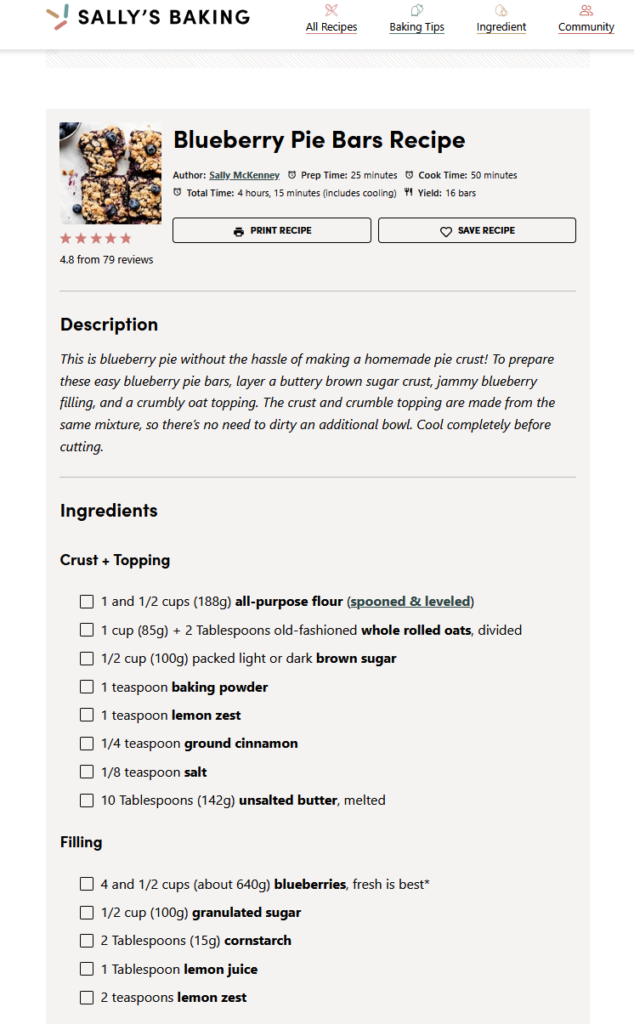
Sally’s Baking Addiction is a great example of recipe usability done right. It’s one of my go-to food blogs for dessert recipes because the recipe cards are detailed, easy to scan, and designed for real-world cooking.
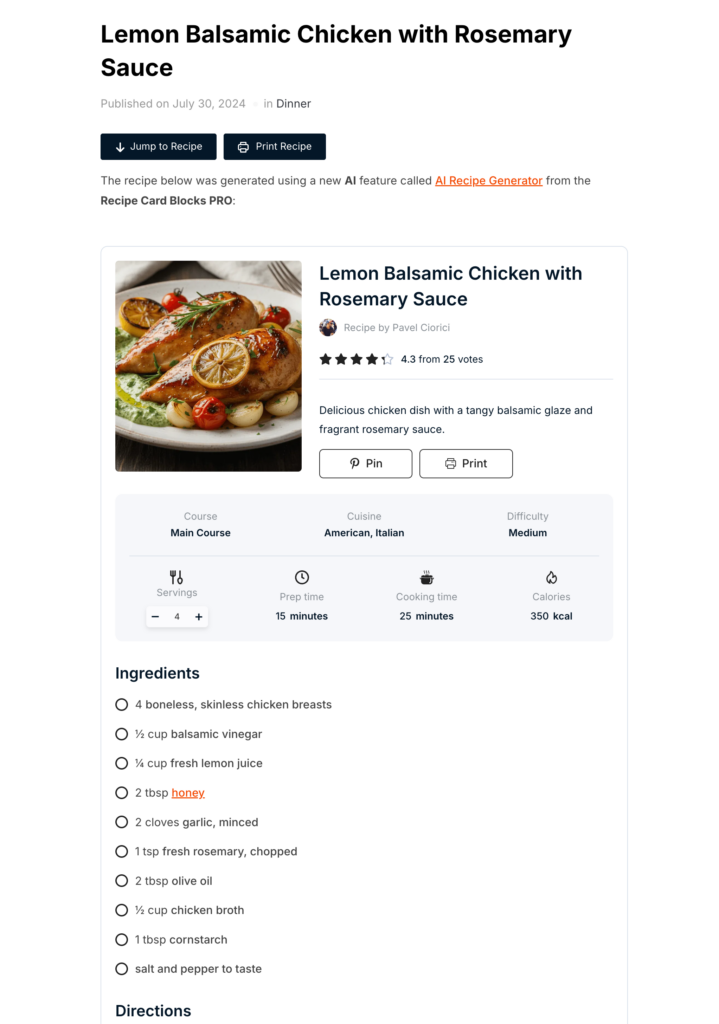
With WPZOOM’s food blog themes, you can pair clean recipe layouts with powerful recipe plugins to create professional-looking recipe pages complete with all important details.
Check out our guides on the best recipe plugins for WordPress and how to add recipe cards in WordPress for step-by-step instructions.
#2: Beautiful Food Photography
Great food photos instantly communicate flavor, texture, and quality before a reader even starts reading.
If you’re like me, you probably search for easy dinner recipes on Pinterest regularly.
Sometimes, a recipe stands out purely because the photography looks so good that you immediately want to see the full recipe. Then, when you land on the blog and see that same visual quality throughout the post, it builds trust in the recipe itself.

Don’t Go Bacon My Heart is a great example of this. The close-up photography, rich textures, and consistent style make recipes feel approachable and crave-worthy.

Foodica (Minimal) helps highlight food photography with clean layouts, featured image sections, and mobile-friendly galleries that keep visuals front and center.
#3: Organized Recipe Index
An organized recipe index helps readers quickly browse and discover recipes across your blog. Instead of relying only on search engines, visitors can explore your posts by category, meal type, cuisine, or ingredient.
This food blog feature improves usability, encourages readers to stay longer, and makes it easier for returning visitors to find recipes they already enjoyed, and helps readers discover more recipes to try.
A well-structured recipe index is also good for SEO because it strengthens your site architecture and helps search engines better understand your content.

Preppy Kitchen is a great example of this done well. John does an excellent job organizing recipes into easy-to-scan categories like dessert recipes, main dish recipes, breakfast recipes, and more, making the site feel simple to navigate despite having a large recipe library.

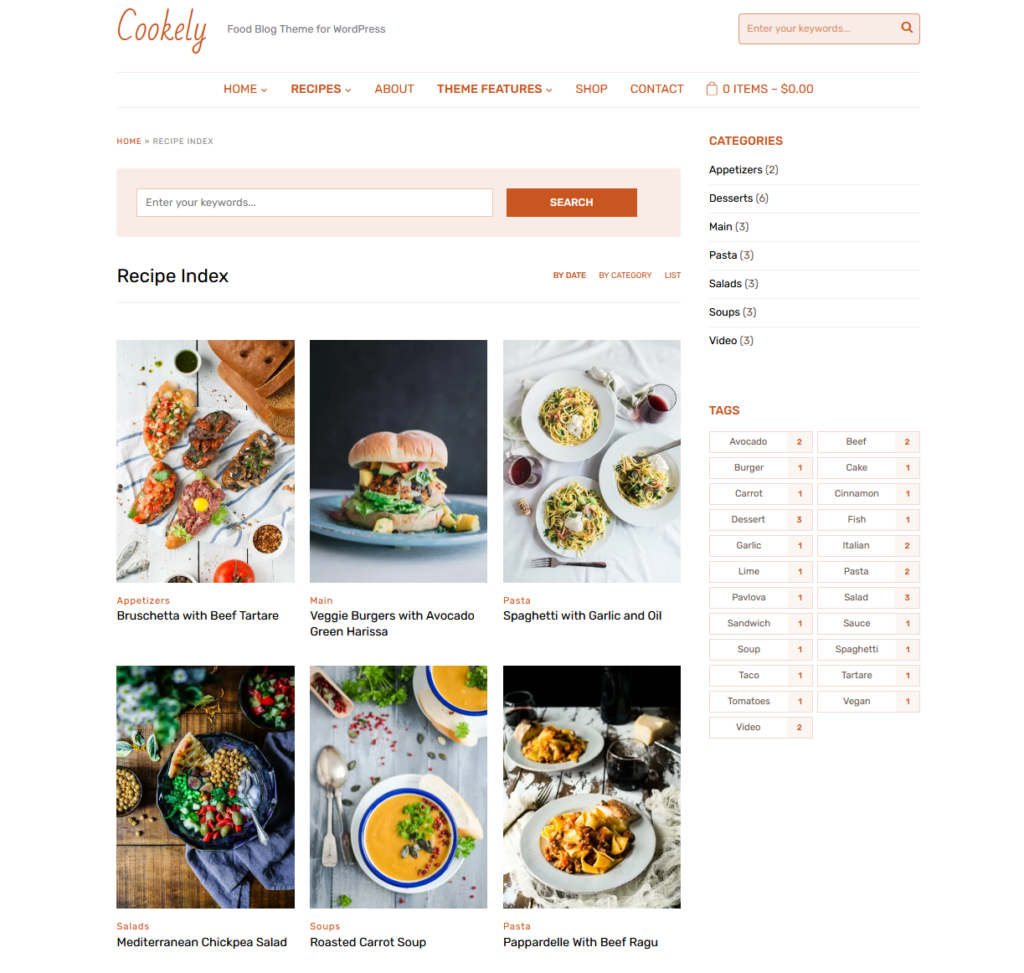
With Foodica (Modern), you can create an organized recipe index that rivals the best. It has everything from a search bar to categories and tags. Plus, it lets users view the recipe index in multiple ways including by date, by category, or in a list.
You can also explore our roundup of the best WordPress recipe themes for more inspiration.
#4: Easy Search and Filtering Options
Search and filtering features on food blogs help readers quickly find recipes that match what they’re looking for. This creates a better user experience, especially for websites with large recipe libraries.
Readers can filter recipes by meal type, dietary preference, cooking time, or ingredients. A good search bar should also be easy to spot and work well on mobile devices.

I Wash You Dry does this particularly well. One thing I really like is that the search results are visual, so you can immediately see the recipe instead of only seeing recipe titles. It makes browsing feel faster, easier, and more intuitive.
And here’s what Foodica (Minimal)’s search results look like:

And with Cookely, you also get filtering options that lets readers filter recipes by categories and tags.
#5: About Page
An About page helps readers connect with the person behind the recipes. It builds trust, strengthens your brand, and gives readers a reason to come back beyond a single recipe search.
A good About page should share your story, cooking style, experience, and what readers can expect from your blog. Adding personal photos, a short introduction, and a friendly writing tone can make your site feel more memorable and authentic.

The Woks of Life has a great About page that balances personality, storytelling, and professionalism without feeling overly formal.
Here’s a look at an About page built with Foodica (Modern) with space to tell your story and let readers know what they can expect from your food blog:

#6: Homepage
Your homepage is often the first impression readers have of your food blog. A well-designed homepage helps visitors quickly understand your style, discover recipes, and navigate your content.
Good food blog homepages typically include featured recipes, recipe categories, a search bar, recent posts, and a short introduction to the blogger. Clear navigation and strong food photography also help guide readers toward exploring more content.
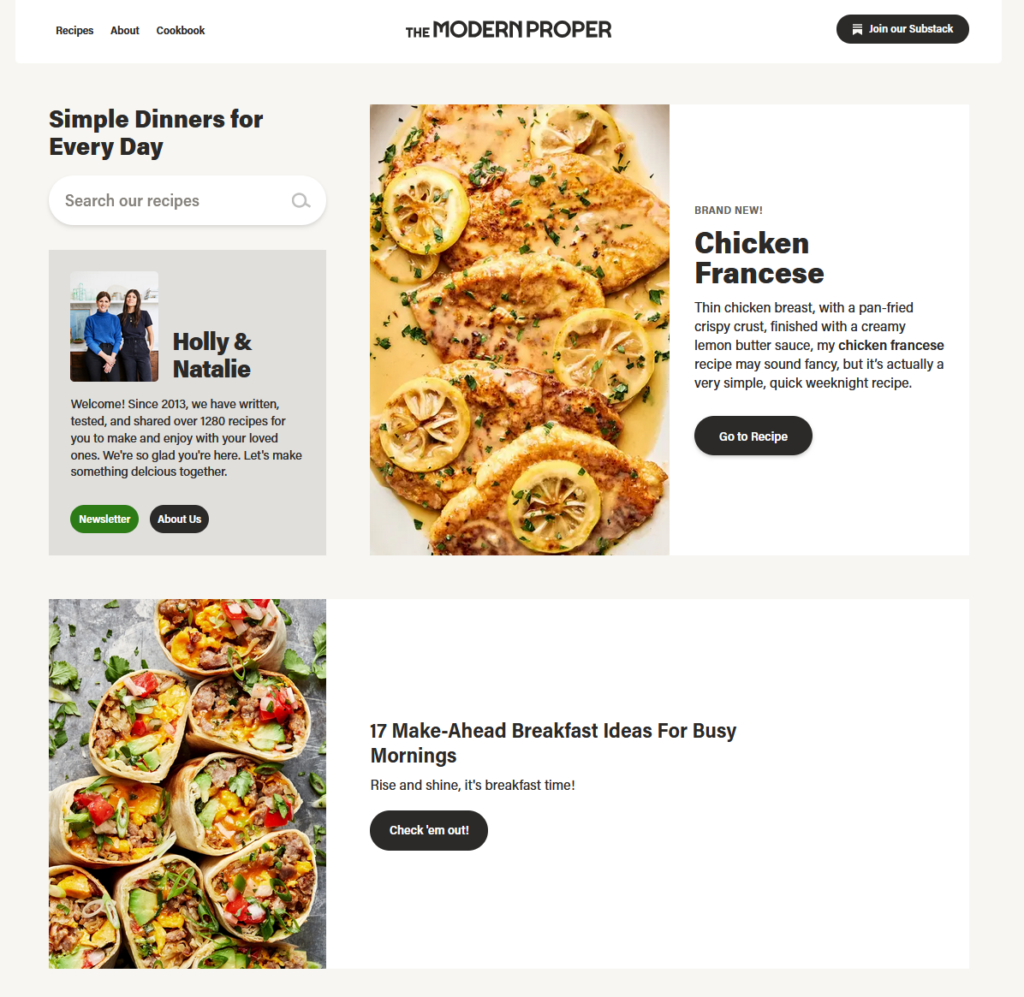
The Modern Proper is a great example of a clean, visually organized homepage that balances recipe discovery with branding.
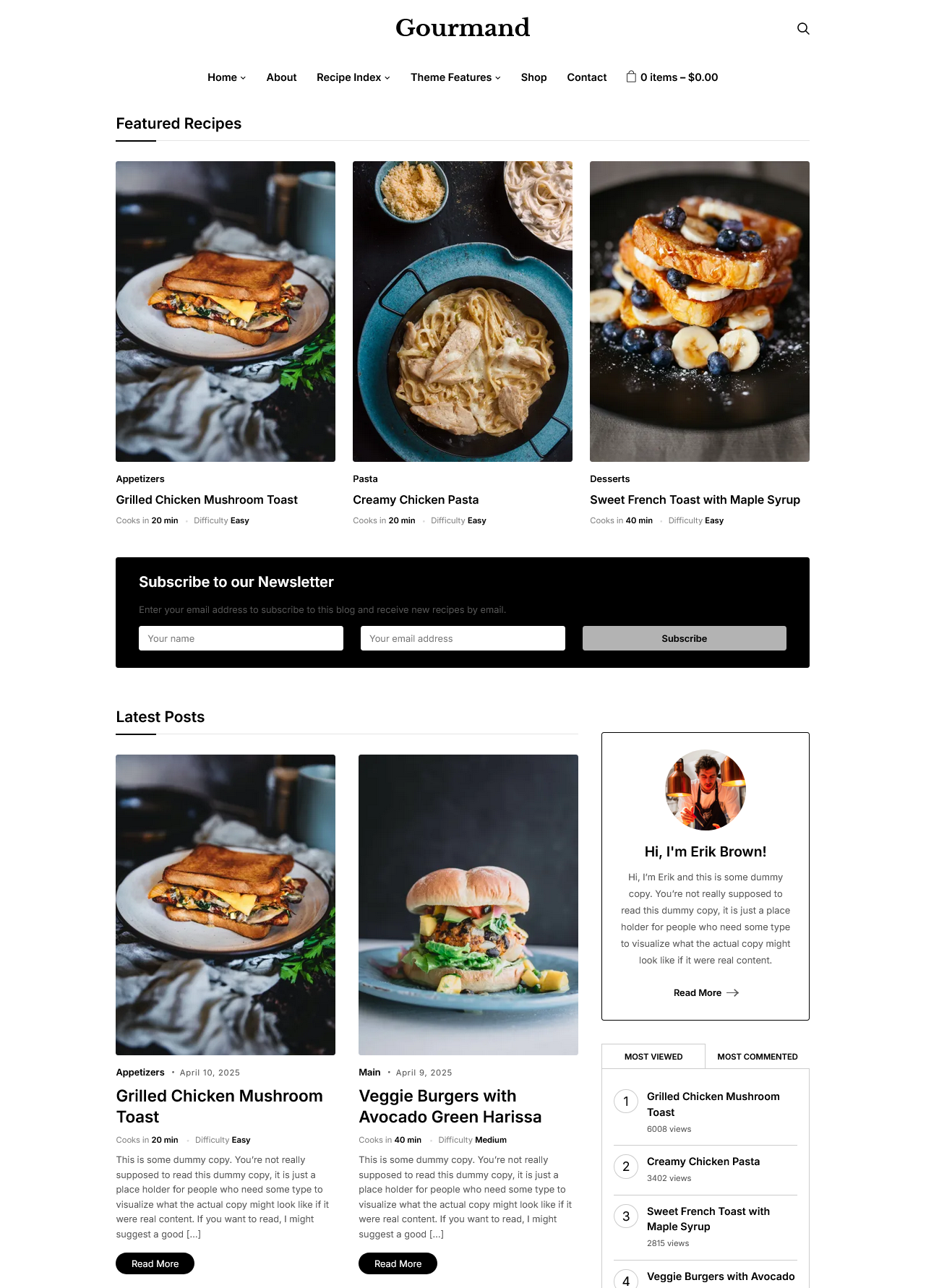
WPZOOM food blog themes include customizable homepage layouts, featured recipe sections, sliders, category blocks, and newsletter areas designed specifically for food bloggers. Here’s a look at Gourmand’s homepage:
A comments section helps turn your food blog into a community instead of just a recipe archive. Readers often use comments to ask questions, share substitutions, leave reviews, or talk about how a recipe turned out.
Active discussions also build trust because new readers can see real feedback from people who have actually made the recipe. Placing the comments section below the recipe card keeps the focus on the recipe while still encouraging interaction.
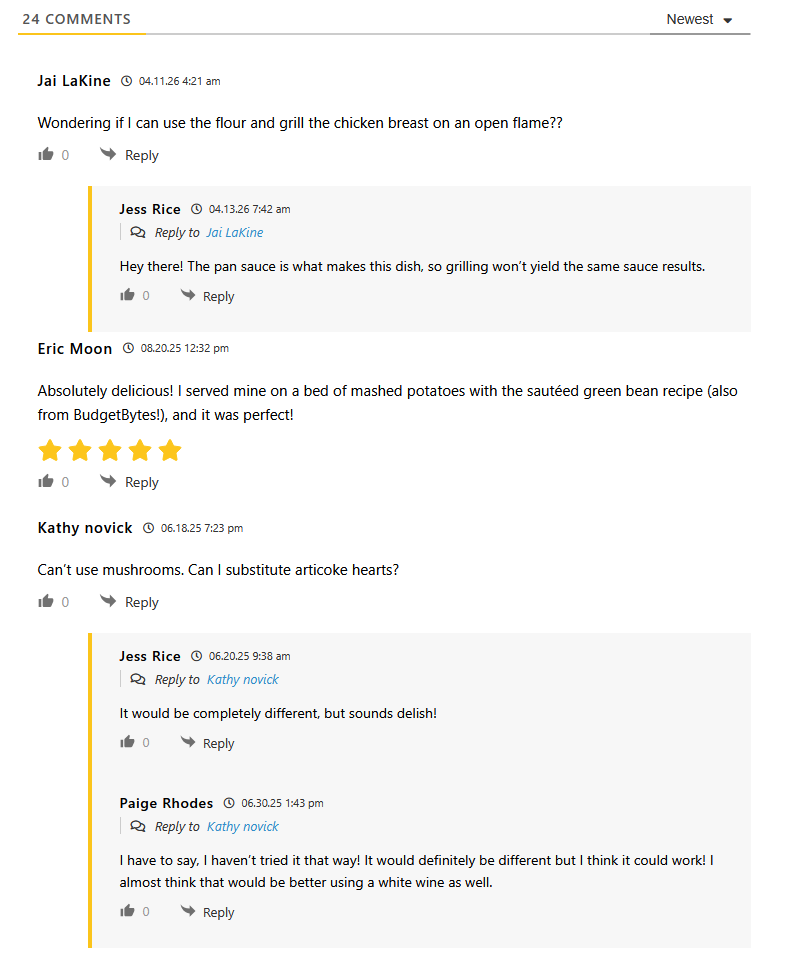
Budget Bytes does this particularly well with active, helpful comment sections that add extra value to recipes.
Here’s what comments look like with the Foodica (Modern) theme:
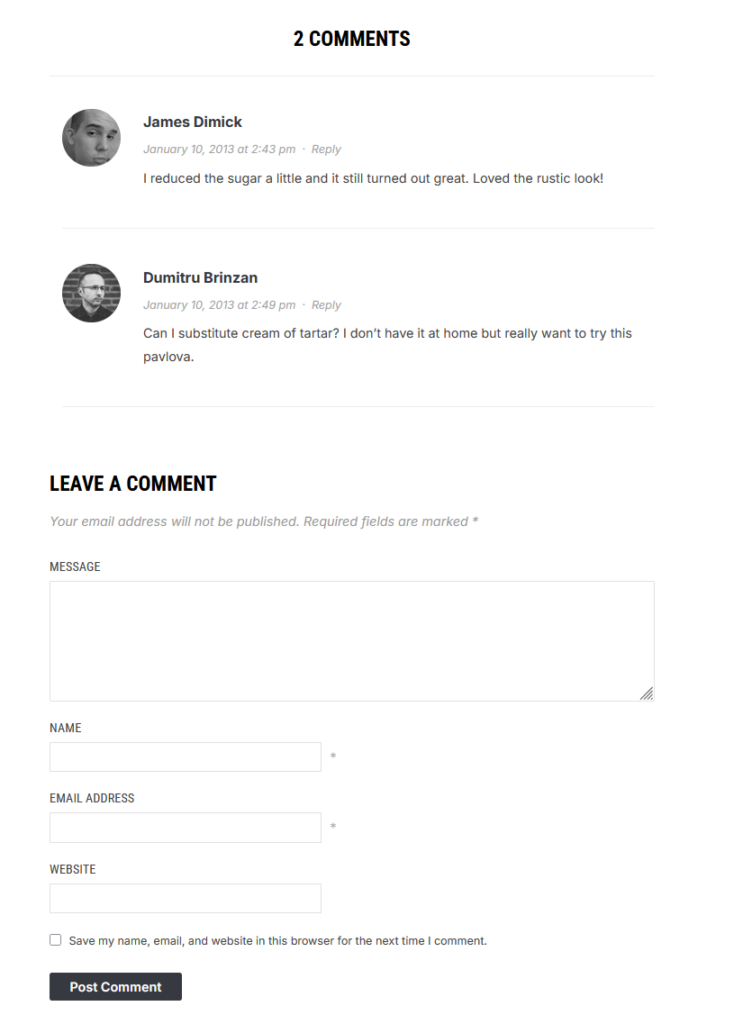
All WPZOOM food blog themes support clean comment layouts that fit naturally into recipe posts without disrupting the reading experience.
#8: Social Sharing Buttons
Social sharing buttons make it easier for readers to share recipes on platforms like Pinterest, Facebook, and Instagram. For food bloggers, this can significantly increase traffic, brand awareness, and returning visitors.
Pinterest sharing is especially important because many readers save recipes to boards they revisit later while meal planning or grocery shopping. Easy-to-find sharing buttons encourage more saves and shares without interrupting the reading experience.

Love & Lemons uses clean, visible social sharing buttons that fit naturally within recipe posts and encourage sharing across platforms.
All WPZOOM food blog themes support social media integration and layouts designed to make recipe sharing feel seamless.
#9: Mobile-Friendly Design
A mobile-friendly design is essential for modern food blogs because many readers are viewing recipes directly from their phones while cooking. If text is difficult to read, buttons are too small, or pages feel cluttered, readers are more likely to leave.
Good mobile design improves usability by making recipes easy to scroll, scan, and follow in real-world cooking situations. Features like responsive layouts, readable fonts, and sticky navigation can make a big difference.

Fit Foodie Finds is a great example of a mobile-friendly food blog with clean layouts and easy recipe navigation.
Here’s what Foodica (Minimal) looks on desktop and mobile:
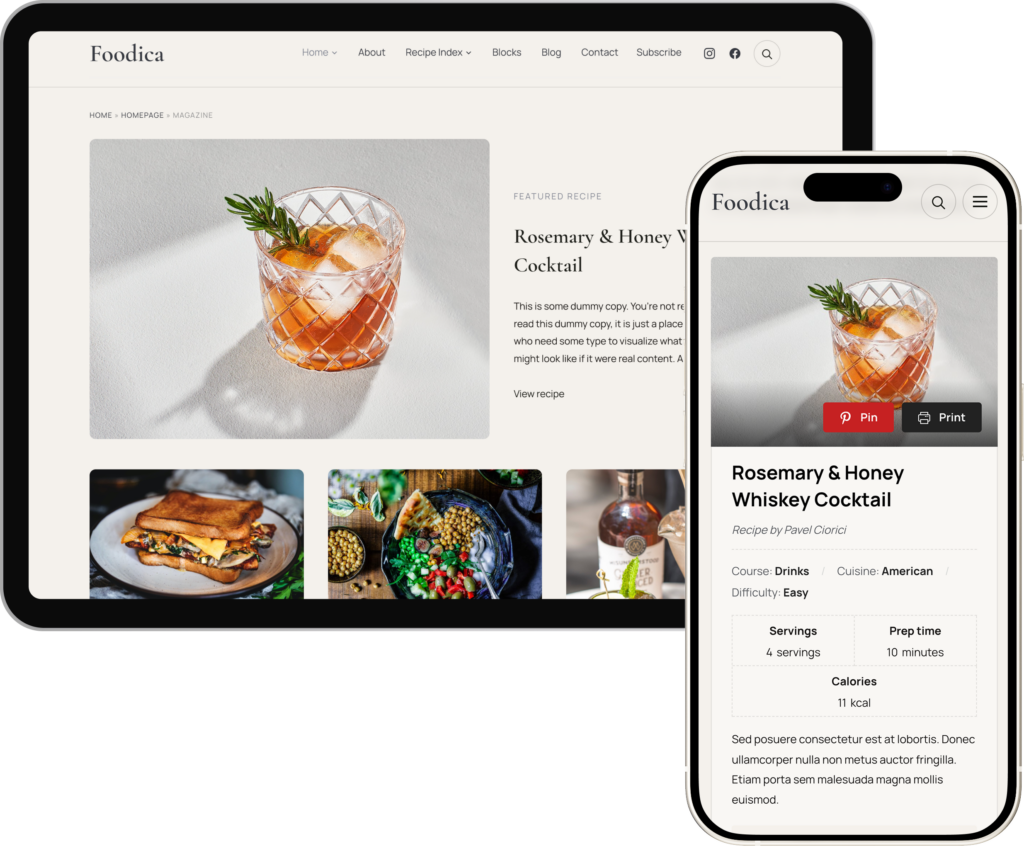
All WPZOOM food blog themes are fully responsive and optimized for mobile browsing. Check out our roundup of the best WordPress themes for food blogs for more mobile-friendly designs.
#10: Fast Loading Site
A fast-loading food blog creates a smoother experience for readers and helps keep them engaged. When someone is trying to cook dinner or quickly check ingredients from their phone, slow pages can become frustrating fast.
Site speed also affects SEO. Faster websites tend to perform better in search results and reduce bounce rates, especially on mobile devices. Here’s a speed test I ran on Google PageSpeed Insights to test Foodica:

WPZOOM food blog themes are built with performance in mind, using clean code, responsive layouts, and optimized designs that help food blogs load quickly without sacrificing visual appeal.
Build a Better Site With the Right Food Blog Features
Great food blogs rely on strong UX, beautiful visuals, and smart features like search, organization, and mobile-friendly design. When these elements work together, they create a smoother, more enjoyable experience for readers.
If you’re ready to build a food blog that looks great and performs even better, explore WPZOOM’s food blog themes to get started.


