

Like all organizations, businesses are social systems composed of cultural, technological, and structural elements that interact with one another. The way these elements interact determines whether an organization succeeds or fails.
This article examines two organizational scenarios, each with distinct internal dynamics and varying attitudes toward growth. Our focus will be on business organizations, specifically web agencies. We will examine the dynamics that lead success-oriented agencies to grow in a structured and consistent manner, characterized by increasing revenues and margins, a focus on organizational well-being, and long-term prospects.
This is how agencies succeed in global markets in 2025.
Fragile growth: Common traits and rationales for steering clear
Before analyzing the factors that lead to high margins for agencies and economic organizations, let’s take a moment to consider fragile growth.
Fragile growth occurs when an agency’s revenue or customer base grows, but the company becomes more vulnerable to external shocks as a result of this expansion.
Although the company appears to be growing, its margins, internal processes, and team health are deteriorating. Essentially, fragile growth makes the organization vulnerable because it conceals costs that erode margins.
The problem lies not in the visible costs, but in the hidden ones. These are the expenses or economic losses that are not clearly visible on the agency’s balance sheet.
For agencies operating under these conditions, the consequences can be severe enough to undermine the company’s survival. These are the most common consequences of growing hidden costs:
- Erosion of margins: Projects that could have been profitable end up causing losses because the time spent on corrections and repetitive tasks exceeds expectations.
- Reduced productivity: Unnecessary meetings, bug fixes, and missing information lead to unproductive working hours. This time could be spent more productively, on new projects, internal training, and new skill development.
- Decreased quality: The absence of a clear growth strategy can lead to suboptimal solutions, rushed choices, and communication issues. These factors may lead to a decline in product and service quality, ultimately damaging your brand reputation.
- High turnover rates: Inefficient processes, missed deadlines, and constant emergencies generate frustration within the team. This may result in high turnover rates.
Now that you have a grasp of the consequences of hidden costs, let’s explore how to recognize and prevent them.
Technical debt
Wikipedia defines technical debt as “a qualitative description of the cost to maintain a system that is attributable to choosing an expedient solution for its development.” While an expedited solution can accelerate development in the short term, the resulting low quality may increase future costs if left unresolved.”
In other words, technical debt is the hidden cost of quick development choices that speed up delivery in the short term but require more effort and money for maintenance and future modifications in the long term.
For a web agency, these costs appear as high maintenance times, an increase in bugs and errors that require quick resolution, and difficulties in training and onboarding new team members. They also include the “licensing, tools, and infrastructure needed to manage or resolve the debt.”
Process costs
Process costs encompass all expenses necessary to produce a product or service. Costs of Quality (COQ) and Costs of Poor Quality (COPQ) fall under this category, and accurately estimating these costs is essential for maintaining high profitability across projects and the business as a whole.
Unproductive costs manifest as rework, unnecessary meetings, scope creep that goes uninvoiced, and searching for documents and information that have not been properly collected. These costs also appear as errors and wasted time due to ineffective or unclear communication.
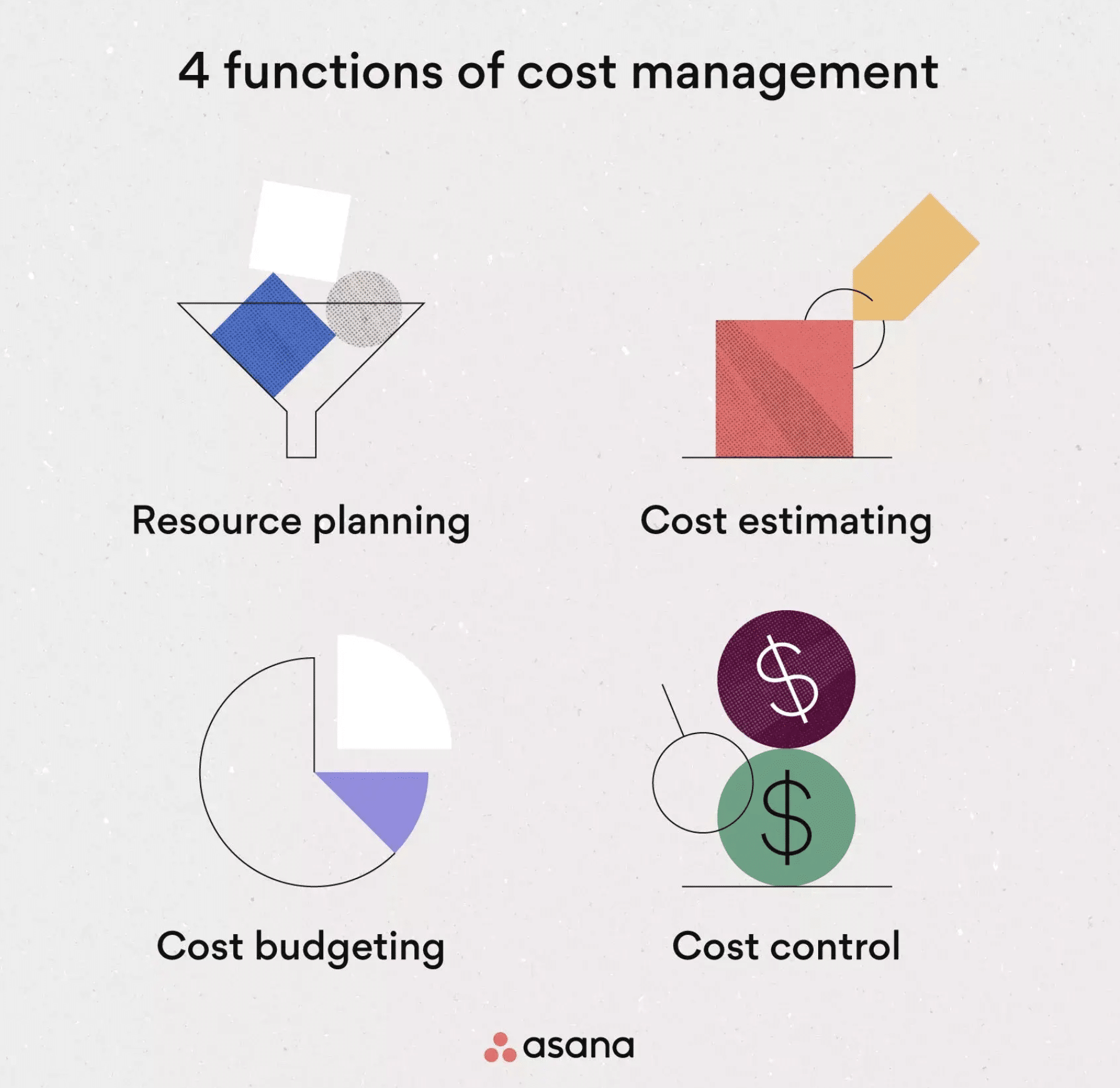
Opportunity cost
Opportunity cost is the most insidious hidden cost because it does not manifest as an actual cost. Rather, it is a lost opportunity that an organization may not even notice.
Wikipedia defines it as “the value of the best alternative forgone where, given limited resources, a choice needs to be made between several mutually exclusive alternatives.”
If your team dedicates time and resources to repetitive tasks such as backups, platform updates, uptime monitoring, and security checks, you have less time to devote to valuable activities, including designing and selling new services, seeking high-level clients, training team members, and innovating products and processes.
From fragile growth to scalable growth
Growth is scalable when revenue grows faster than costs, generating increasing margins.
The key is to focus on a monthly recurring revenue (MRR) model that prioritizes operational efficiency. This model provides the liquidity needed to automate processes and optimize workflows. Work smarter, not harder.
It sounds great, but how do you transition from fragility to scalability?
Here is the answer:
Positioning and specialization
As agency owners, your first step should be to define your market strategy correctly. Being a generalist does not promote operational efficiency and can be particularly challenging for agencies for many reasons.
- Being a generalist is costly because it requires continuous research to select the most appropriate technology stack and solutions for each project and ever-changing problems. This applies to plugins, themes, third-party services, hosting solutions, and other related services and tools.
- Being a generalist makes it difficult to standardize processes and optimize workflows.
- It also makes troubleshooting and debugging more complex. Since different projects require different technologies, your agency has to deal with problems that are constantly new, which takes up valuable time for the tech team.
The agency reduces internal complexity and can charge higher prices for each project by specializing in a specific market niche, such as B2B, high-volume e-commerce, or e-learning platforms, or a specific technological area, such as advanced WooCommerce solutions or custom headless WordPress.
Specialization also promotes the creation of standardized operating models. For a specialized agency, creating templates, boilerplate code, and Standard Operating Procedures (SOPs) specific to your niche is easier because each new project is already 50% to 70% complete.
MRR-based growth strategy
Creating a recurring revenue provides financial stability and prepares your agency for long-term growth.
This strategy is based on the following key points:
- Maintenance and security plans: Maintenance and security packages that extend over time (e.g., annual service packages) mitigate the risks associated with “turnkey” projects. The goal is not to sell clients unnecessary services, but rather to offer them peace of mind by offering essential services, such as regular backups, software updates, security checks, uptime monitoring, bug fixes, and performance optimization. If customers do not purchase these services from your agency, they will purchase them elsewhere or dedicate part of their team to performing these tasks. By relieving customers of the burden of maintenance and security checks, your agency establishes itself as a trusted partner that sells peace of mind, not just web projects.
- Premium managed hosting: Reselling Premium hosting services could allow your agency to gain complete control over the technological environment and increase margins.
- High-value services: By focusing on a specific niche, your agency can deliver high-value services, including conversion optimization, UX analysis, and international regulatory compliance.
Automation and standardization
Efficiency drives your MRR growth. The keywords are automation and standardization.
- Standardized technology stack: WordPress agencies should use a consistent combination of hosting, framework, libraries, and plugins across all their projects. This greatly reduces production and deployment time as well as optimization, troubleshooting, and bug fixing.
- Automation: Use project management tools and site maintenance automation services to automate repetitive tasks, such as backups and updates. This frees up your team to dedicate more time to strategic activities.
- Documentation: Document every step of the process so that it can be repeated and delegated. This includes everything from onboarding new customers to troubleshooting and fixing errors.
Team management and delegation of responsibilities
As agency owners, you should not be the bottleneck for your team. That’s why establishing documented Standard Operating Procedures (SOPs) is essential. SOPs allow you to delegate tasks while maintaining high-quality standards.
This is why teamwork management systems are essential. Project management tools provide a collaborative foundation for converting SOPs into trackable actions. Tools such as Asana, Trello, Wrike, and Basecamp enable your team members to collaborate on projects in a standardized and trackable way.
Formalizing and documenting processes and supporting your team with the right software tools allows your agency to focus on strategic activities rather than operational tasks.
Strategic outsourcing
Attempting to internalize non-core activities can result in inefficient resource utilization. These activities may include technical SEO, UI/UX design, and compliance with major international regulations, such as SOC 2, GDPR, and accessibility standards. They may also include complex activities, such as server management, which would require a dedicated DevOps team.
By outsourcing non-core activities, your agency can focus on providing specialized services and striving for excellence in your niche. Reducing noise—the disruption to workflow caused by having to devote time to non-core activities—allows your team to devote 100% of their time to activities that generate the most value and margin for your business.
It’s important to note that by outsourcing non-core activities, your agency can reduce fixed costs and convert a significant amount of them into variable costs. For instance, by purchasing a premium managed WordPress hosting service, your agency won’t need an internal team to manage a server. This eliminates the need to hire qualified IT staff, resulting in significant cost savings.
Beyond hosting: Why Kinsta is the strategic partner for growth-oriented agencies
Kinsta is a managed WordPress hosting provider designed to help agencies of all sizes grow efficiently and sustainably. Kinsta’s evolving services are designed to provide the necessary tools to achieve excellence and overcome the challenges of today’s highly complex markets.
This is why Kinsta positions itself as a strategic partner for growth-oriented agencies.
Positioning and specialization
It’s easy for agencies that choose Kinsta as their hosting partner to specialize in a niche. This is because our hosting platform is powered by state-of-the-art cloud infrastructure and is fully optimized for WordPress and WooCommerce.
Our caching configuration automatically excludes checkout pages from the cache, ensuring a seamless experience. Additionally, our easy-to-scale resources allow you to handle traffic spikes with ease, supporting agencies that specialize in high-volume e-commerce stores.
Our Cloudflare integration provides a content delivery network (CDN) with 300+ locations worldwide, an enterprise-grade firewall, DDoS protection, automatic WebP image optimization, Edge Caching, Early Hints, Wildcard SSL certificates, HTTP/3, and a Kinsta-only range of IP addresses. All of these services are available to all of our customers, regardless of their plan.
But that’s not all. Kinsta’s platform is designed with developers in mind. It provides advanced site development and management tools, including one-click staging environments, Git, SSH, and WP-CLI access, a Search and Replace tool, granular cache management, error logging, an Application Performance Monitoring (APM) tool, a powerful API that allows you to automate site management, and a local development tool that integrates seamlessly with Kinsta’s WordPress hosting.
Additionally, Kinsta supports both application and database hosting, which is crucial for agencies specializing in headless WordPress solutions that focus on modern technologies such as React.js, Next.js, Vue.js, Astro, and more.
Kinsta is a great third party provider for managing and serving WordPress blogs. They take care of security for you so you can focus on the exciting stuff like theme development and new features for your blog.
This combination of tools and services frees agencies from the complexities of hosting configuration and optimization, allowing them to focus entirely on their core services and products.
Using Kinsta for all your projects enables your agency to focus on your niche, standardize your hosting stack, and achieve greater operational efficiency.
MRR-based growth strategy
MRR depends on an agency’s ability to sell essential services, such as maintenance, security, and hosting. This approach is not limited to website creation or app development; it encompasses all services related to the life cycle of a WordPress website.
Kinsta is a strategic partner for agencies aiming for monthly revenue growth and sustainable development. With our Agency Plans and Agency Partner Program, you can resell hosting at significant margins. You can include managed hosting resale in your service packages, increasing your MRR while maintaining complete control over the environment.
This alone is extremely beneficial for agencies, but the most interesting part is yet to come. Kinsta offers a range of services and tools specifically designed for business websites, including e-commerce websites. These tools help agencies by handling aspects of website management that would otherwise be their responsibility. These include platform optimization, automatic backups, automatic updates, uptime monitoring, security checks, DDoS protection, and a free malware removal guarantee. Agencies can resell these services to their customers, providing them with peace of mind while avoiding the burden of tasks and operations that Kinsta performs by default for all sites hosted on our platform.
Furthermore, Kinsta’s managed hosting for WordPress gives your agency full access to MyKinsta for all client sites. This includes Kinsta’s award-winning support service, which ensures premium support and fast response times. This improves trust, and strengthens your role as a strategic partner.
Kinsta’s platform and staff really feel like an extension of our own team. They’re exactly what we needed.
Automation and standardization
All Kinsta environments use the same technology stack. This promotes process standardization and reduces the time spent on troubleshooting and bug fixing. Additionally, all environments on our platform use the same tools and services:
- One-click staging environments (available on all plans with some exceptions) allow potentially risky operations to be performed in an isolated, secure environment, separate from your live site
- Integration with GitLab, GitHub, and Bitbucket for deployment automation and CI/CD
- A local development suite that integrates seamlessly with MyKinsta
- SSH and WP-CLI access to manage your client websites from the command line
- Kinsta API for integration with custom apps and third-party tools
Kinsta also provides powerful automation tools:
Switching to Kinsta is one of the best decisions we’ve made since founding Cornershop Creative almost 10 years ago — we couldn’t be growing as fast as we are without them.
Team management and delegation of responsibilities
As an agency owner, it’s crucial not to be a bottleneck for your team. Efficient team management and delegation prepare your agency for growth.
Kinsta offers a suite of tools to help with every aspect of team management, including onboarding, task assignment, and offboarding.
- SAML Single Sign-On (SSO) for centralized, secure access management to your agency’s environment
- MyKinsta multi-user dashboard with unlimited users and granular user permission management for secure delegation of responsibilities
- Support service available for all your team members
- An activity log to track operations, so you always know who does what in your team
- Access to SSH, WP-CLI, Git, and staging environments is available for all developers on your team. This allows you to manage centrally, assigning only the necessary privileges to your team members.
With more than a hundred sites, we have automated processes that used to take several hours. We can now identify plugin vulnerabilities and update plugins and themes from a single interface. Thanks to the Kinsta API, we have set up alerts for administrators when customers exceed their site usage limits. Finally, MyKinsta’s ease of use allows designers to independently create and manage a staging site.
Strategic outsourcing
Kinsta is an excellent example of a strategic outsourcing partner. With a variety of services tailored to WordPress agencies and independent developers, Kinsta reduces the workload for technical teams by managing all server configuration and maintenance. With Kinsta, there is no need to maintain an internal team of system administrators. This allows you to convert a particularly burdensome fixed cost—namely, personnel costs—into a variable cost, namely the hosting service subscription.
The agency team is freed from repetitive, low-value tasks such as site backups, updates to the core, plugins, and themes, uptime monitoring, and security scans. This gives the team more time to devote to strategic activities, such as lead nurturing, developing new projects, providing internal training, and more.
With world-class, multilingual technical support available, problems can be offloaded to Kinsta’s team of WordPress experts, so they don’t fall directly on the team.
Kinsta works like we work – we need great performance so there are no surprises and great support in case something does happen – we get both. The combination of performance, features and support are a great reason to consider Kinsta.
Summary
Shifting from a fragile growth model to a stable or scalable one means transitioning from an improvised business management approach based on one-off projects and characterized by emergency mode to a strategic one geared toward maximizing efficiency and success in today’s hyper-complex markets.
For all the reasons outlined in this article, Kinsta is not just a premium managed hosting provider; it is also a true strategic partner and an extension of your team.
Try Kinsta today at no risk. Take advantage of the free trial on selected plans and experience the benefits of having a world-class hosting partner for your agency in 2025.

Kinsta
Carlo is a passionate lover of webdesign and front-end development. He has been playing with WordPress for more than 20 years, also in collaboration with Italian and European universities and educational institutions. He has written hundreds of articles and guides about WordPress, published both on Italian and international websites, as well as on printed magazines. You can find him on LinkedIn.


