

If you’ve been paying attention over the past year, you’ve probably noticed that traditional “10 blue links” are no longer the only way people discover information. Today, Google shows AI-generated answers directly in results, and tools like ChatGPT, Claude, and Perplexity are changing how people discover information.
Instead of clicking through multiple pages, users often get summarized answers, comparisons, or recommendations right away. That shift has introduced new terms to the conversation in addition to SEO: AEO and GEO.
At a glance, they can seem confusing. Some guides treat them as completely different strategies. Others dismiss the newer terms as rebranded SEO. In reality, these concepts overlap, but they focus on different parts of how content is found, understood, and surfaced across both search engines and AI systems.
Here’s the thing, though: most WordPress sites don’t fail at GEO or AEO because they misunderstood the acronyms. They fail because their sites aren’t fast, stable, or well-structured enough to be reliably retrieved by modern search systems in the first place. That’s the lens we use throughout this guide because it’s what we actually see from the infrastructure side.
What is SEO?
SEO (Search Engine Optimization) is the practice of optimizing your website so search engines like Google can find your pages, understand what they’re about, and rank them for relevant queries.
For a long time, this mostly meant appearing in the traditional search results and getting clicks from users. Even though search has evolved, that core idea hasn’t changed. SEO still comes down to a few fundamentals:
- Making your site accessible to search engines so they can crawl and index your pages.
- Creating content that matches what people are searching for.
- Building authority and trust through links, mentions, and overall reputation.
- Maintaining a fast, well-structured website that is easy to navigate and use.
For WordPress sites, this usually starts with the basics: good hosting, clean URLs, proper internal linking, fast-loading pages, and making sure your content is organized in a way that both users and search engines can follow.
What is AEO?
AEO, or Answer Engine Optimization, is about structuring your content so it can be selected, extracted, and presented as a direct answer.
Instead of optimizing just for rankings and clicks, you are optimizing for visibility inside answers themselves. That includes:
- Google’s AI Overviews
- Featured snippets and “People also ask”
- ChatGPT, Perplexity, and similar tools
Many guides describe AEO as “the future of SEO,” but a more useful way to look at it is as an extension of SEO. The goal is still visibility, but the format of that visibility has changed. Instead of asking, “How do I rank for this keyword?” the question becomes, “Can my content be used as the answer?”
There is also some confusion around the term itself. In some cases, AEO is used interchangeably with terms like “AI SEO” or even “GEO”. Even newer concepts are starting to appear. For example, Addy Osmani, who works at Google, describes it as agentic engine optimization, in which content is structured not just for humans or search engines but for AI agents that actively retrieve and use information.
All of these point to the same underlying shift that search systems are no longer just ranking pages. They are reading, selecting, and assembling answers.
What is GEO?
GEO, or Generative Engine Optimization, describes improving a site’s visibility in AI-generated responses, rather than just in a ranked list of search results.
With traditional SEO, the goal is usually to rank a page for a query and earn the click. With GEO, the goal is to include your content, brand, or site in the pool of sources AI systems draw from when generating an answer, summary, or recommendation.
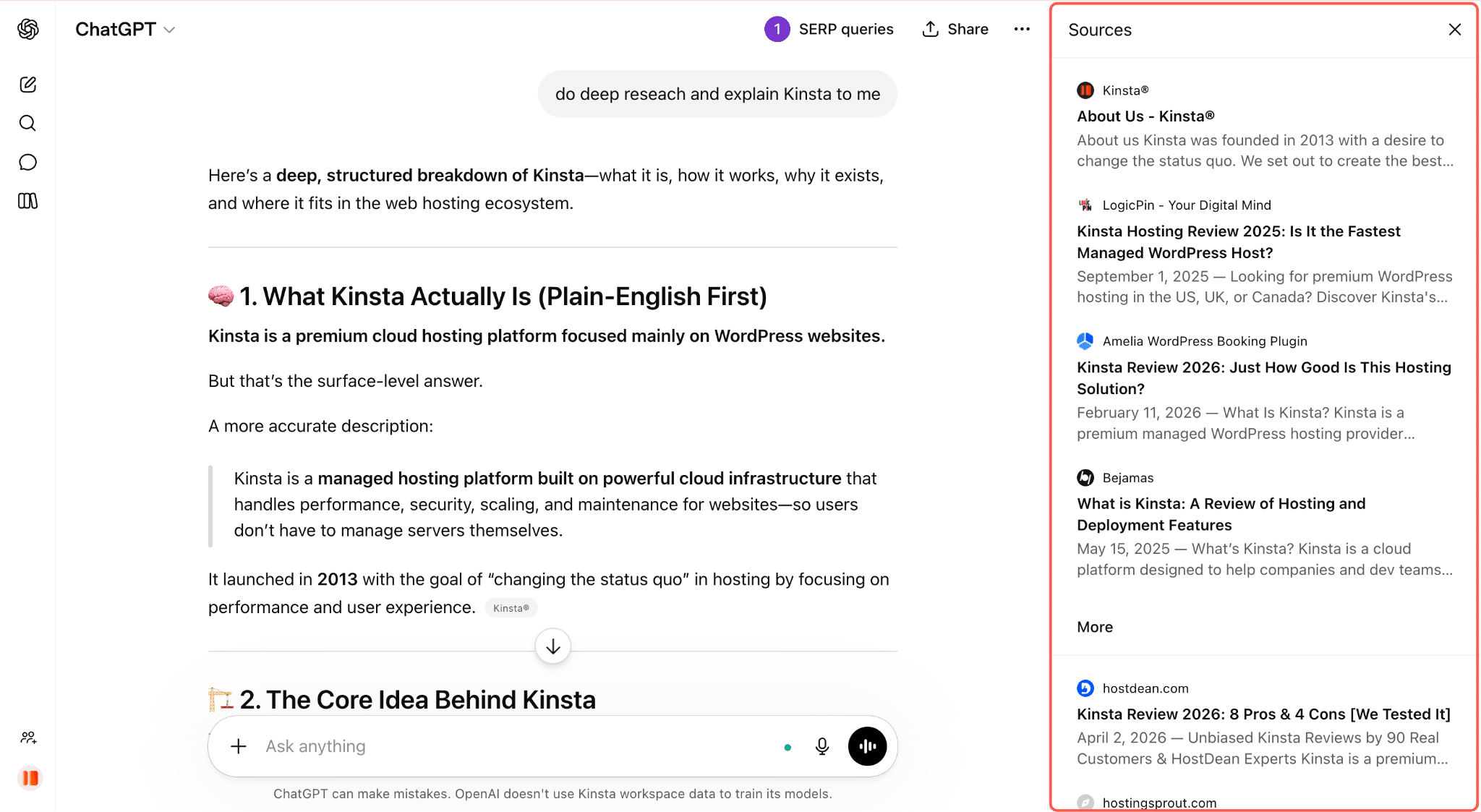
This is also where GEO and AEO start to overlap. AEO is more about making a specific piece of content easy to extract as a direct answer. GEO is about visibility across generative search experiences as a whole, where systems pull from several sources, weigh trust signals, and decide what deserves to be cited in the final response.
SEO vs AEO vs GEO: What’s the difference?
Now that we’ve broken down each concept, the next step is to see how they actually differ side by side. Here’s a simple way to look at it:
| Aspect | SEO | AEO | GEO |
| Main goal | Rank in search results | Be selected as a direct answer | Be included in AI-generated responses |
| Focus | Keywords, content, links, technical SEO | Clear answers, structure, and extractability | Authority, mentions, overall web presence |
| Scope | Your website | Individual pages and sections | Your site and the wider web |
| How content is used | Displayed as a link to your site in search results | Extracted as an answer | Combined into AI-generated responses |
| Key question | Can I rank for this query? | Can my content answer this clearly? | Will my content be used or cited? |
SEO is still the starting point. Without it, your content may not even be discovered. AEO builds on that by making sure your content provides a clear answer. GEO extends it further by increasing the chances your content or brand shows up across AI-driven search experiences.
It’s also worth recognizing this as a natural evolution, not a revolution. SEO started with keywords and links. Then it evolved to include E-E-A-T, page experience, and structured data. GEO and AEO are the next layer in that same progression, not a replacement for what came before.
“There’s a lot of noise around these acronyms, but the basics haven’t changed. You still need to be crawlable (SEO), be clear (AEO), and be trusted across the web (GEO). You still need to write for humans and machines. The difference now is that it’s not just about rankings, it’s about whether your content can be extracted and reused by AI. If you get this right, you’re already most of the way there.” — Antonio Tinoco, SEO Team Lead at Kinsta
How to optimize WordPress for SEO, AEO, and GEO
Optimizing for SEO, AEO, and GEO does not mean running three completely different strategies on your WordPress site.
In reality, the same core improvements support all three. What changes is how you think about them. Instead of focusing only on rankings, you’re also thinking about how your content is understood, how easily it can be extracted, and whether it’s strong enough to serve as a source across platforms.
A useful way to approach this is to start with the fundamentals and build up from there.
Start with your site infrastructure
Before getting into content or AI visibility, it’s worth looking at how your WordPress site is actually built. This is where most issues begin, and it’s also where GEO becomes more technical than most guides acknowledge.
There are two infrastructure problems a WordPress site can run into with modern AI crawlers, and they pull in opposite directions.
The first is being too slow or unstable. From what we observe across Kinsta-hosted sites, AI bots and search crawlers hit faster, more stable sites more frequently. AI systems in particular have become significantly more aggressive crawlers over the past year, and if your site responds slowly, redirects excessively, or struggles under load, those systems simply move on.
The second problem is being accessible but unprepared. Faster, well-performing sites do attract more crawl activity, and without proper caching and architecture, that traffic hits dynamic endpoints, bypasses your cache layer, and creates real server load that never converts into any SEO or visibility benefit.
Good infrastructure means handling both sides: staying reliably accessible to crawlers while making sure that access doesn’t degrade performance for your actual users.
On WordPress, the most common things that get in the way of this:
- Bad hosting
- Slow themes
- Too many plugins
- Poor internal linking
- Messy URL structures
The fix is intentional simplicity: use a lightweight theme, minimal plugins, clean URLs, fast load times, and hosting that keeps your site stable and responsive under crawl pressure (not just for human visitors).
This isn’t new advice. But it’s still where most WordPress sites fall short, and in an environment where AI crawlers are hitting sites far more aggressively than they were even a year ago, getting this foundation right matters more than ever.
Use an SEO plugin to stay organized
Most WordPress sites rely on an SEO plugin like Yoast, Rank Math, or SEOPress. That is usually a good decision, not because the plugin “does SEO,” but because it helps you stay consistent.
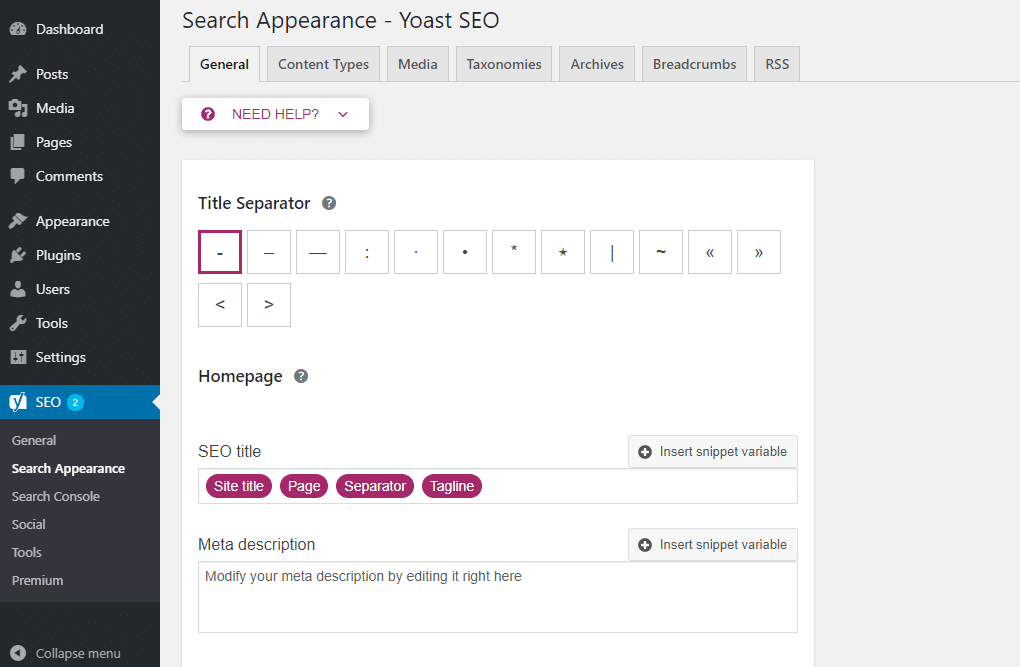
As your site grows, manually managing meta titles, descriptions, canonical URLs, structured data (usually added as JSON-LD behind the scenes), and indexing settings becomes difficult. A plugin gives you a central place to control all of that without touching code.
That said, it is important to understand the role of these tools.
They help you manage your setup, but they do not improve your content or your authority. You still need to decide what to publish, how to structure it, and how to make it useful.
Think of the plugin as a way to keep your technical SEO in order while you focus on the bigger picture. At the same time, it is worth being selective. Using too many plugins can slow your site down, introduce conflicts, and make things harder to manage over time.
Structure your content so it’s easy to extract
AEO is supported by content structure. When people search today, they are often looking for quick, clear answers. Search engines and AI tools need content that’s easy to understand and extract in order to provide those answers.
That is why structure matters so much.
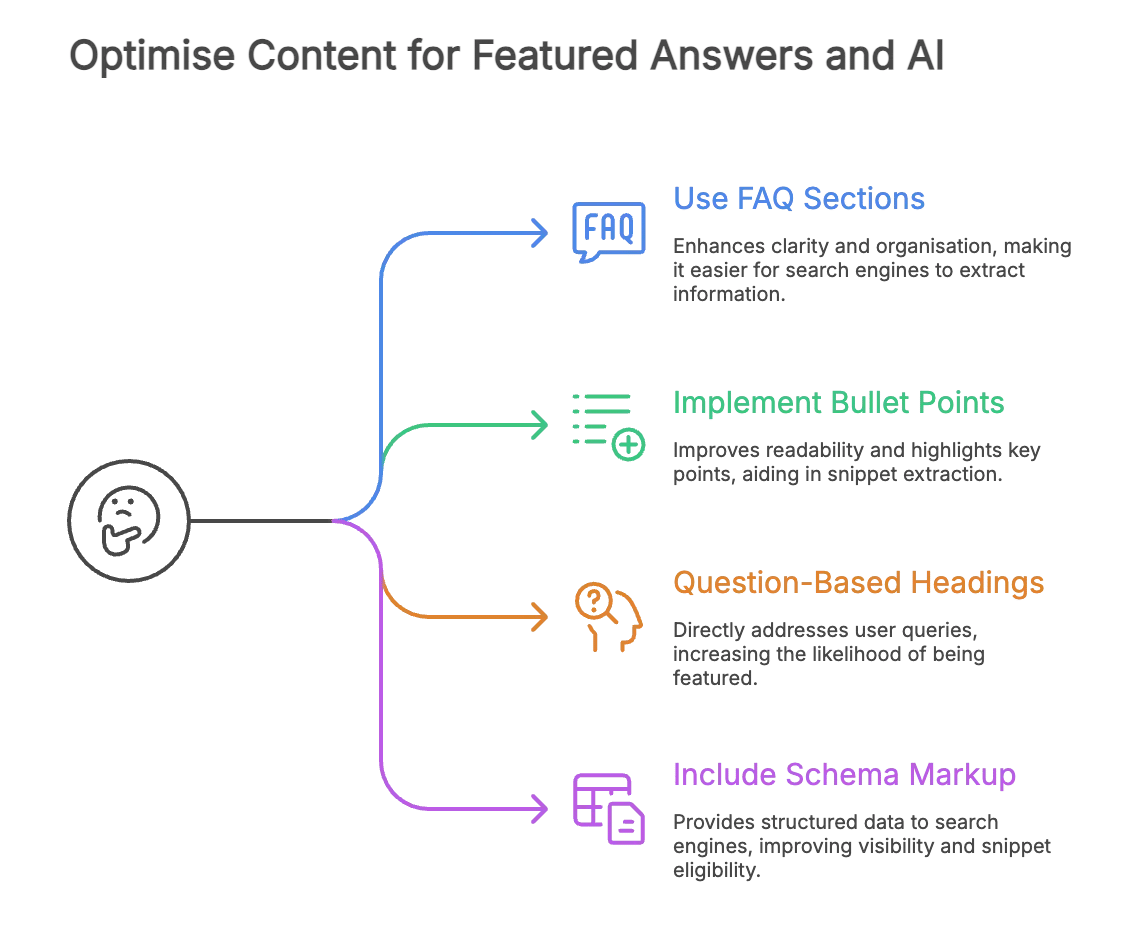
The most common mistake here is burying the answer. A lot of content builds up to the point rather than starting with it. If a section is meant to explain what something is, start by explaining it, then expand on it.
Here’s an example of a vague intro:
“When we talk about featured snippets, there’s a lot to consider. Google has been evolving how it surfaces information for years, and understanding how answers get selected requires looking at several factors, including content structure, relevance signals, and how questions are phrased in your headings.”
Here is a direct answer block (AEO-optimized structure):
“A featured snippet is a short excerpt Google pulls from a webpage to answer a query directly in search results. To appear in one, your content needs to answer the question clearly, early, and in plain language.”
The second version is extractable. The first requires interpretation. AI systems and snippet algorithms heavily favor the second.
Beyond intros, headings matter more than they used to. When you use headings that mirror real questions or search queries, it becomes easier for both readers and AI systems to navigate your content.
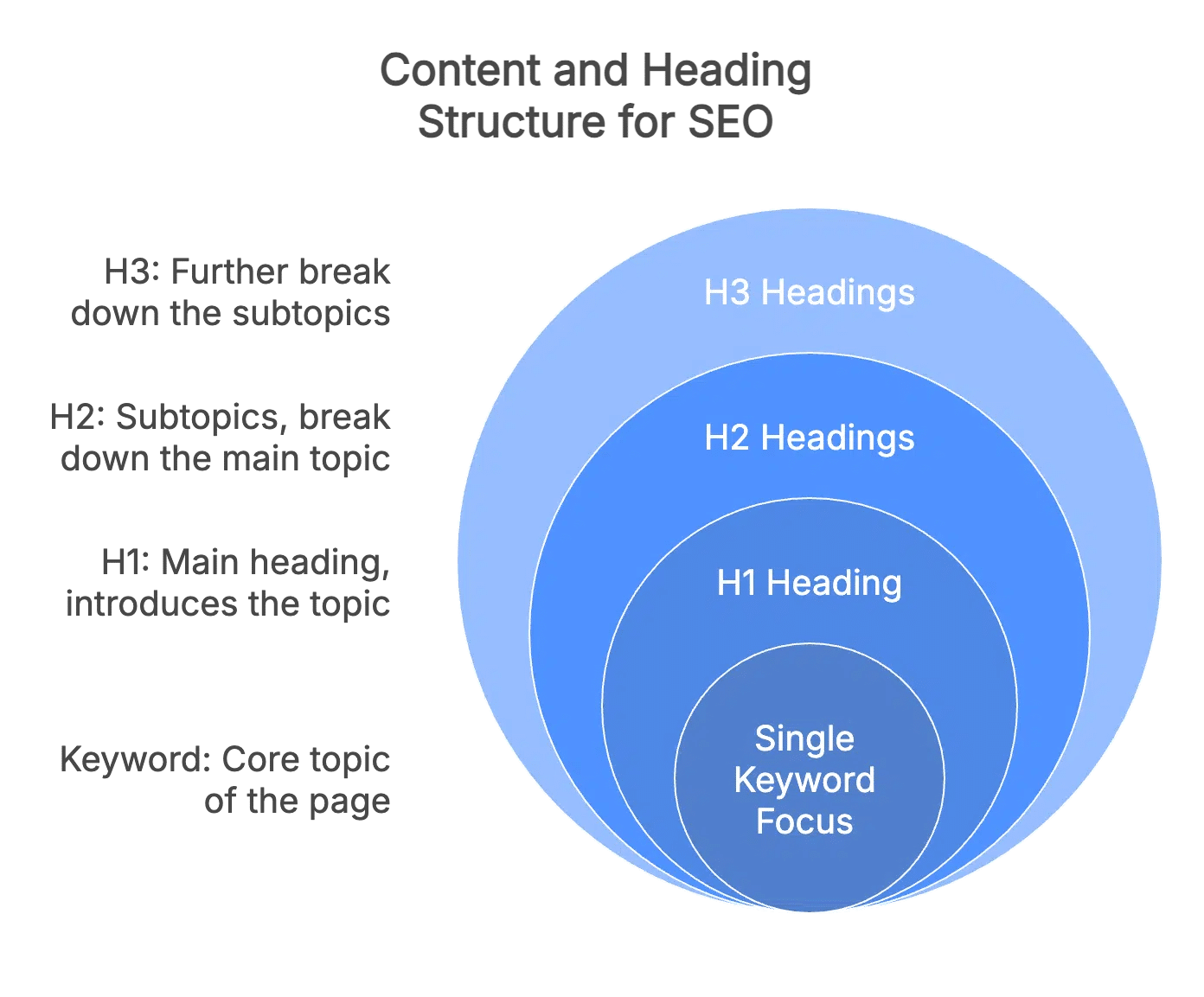
This isn’t about writing for machines. It’s about writing in a way that’s immediately useful.
Build authority that extends beyond your site
This is where GEO becomes most distinct from traditional on-page SEO and where the scope expands beyond your WordPress installation.
Even a well-optimized page may not be enough on its own. AI systems and search engines consider multiple signals when deciding what to include in a response, and those signals are built over time across the web.
If your site is consistently referenced by other reputable sources, if your brand appears across different platforms, earns links from credible publications, and accumulates real citations, that reinforces credibility at a level that on-page optimization alone can’t replicate.
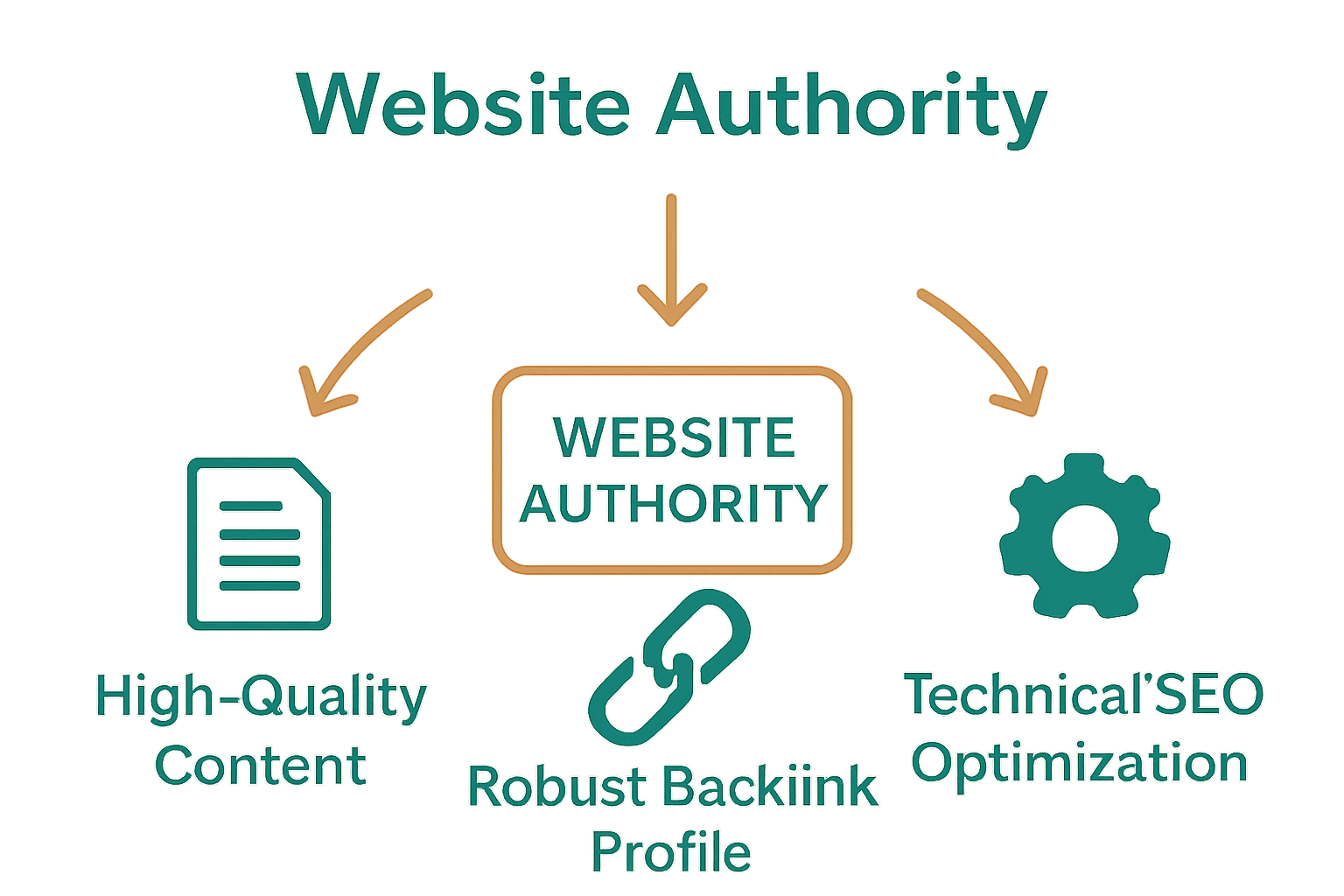
For WordPress site owners, this means thinking beyond individual posts. Publishing one strong article is useful. Building a cluster of related content around a topic is more effective, as it signals depth and makes it easier for search engines and AI systems to understand what your site is actually known for.
This is also the underlying logic behind why commodity content is struggling right now. An article that says the same thing as 20 other articles doesn’t earn citations from humans or from AI. Original thinking, real data, and documented experience earn them.
Make your content clear and readable
Another area that is often overlooked is clarity. There is a tendency to focus on length, but longer content is not always better. What matters more is whether someone can quickly understand what your page is about and find what they are looking for.
If a page is difficult to read or poorly structured, it becomes harder for both users and systems to use it.
Simple improvements can go a long way here. Keeping paragraphs reasonably short, using straightforward language, and making sure each section flows logically into the next all help improve readability.
This is one of those areas where good writing naturally supports both SEO and AEO without complicated techniques.
Common mistakes to avoid
As SEO, AEO, and GEO become more widely discussed, it is easy to overcomplicate things or follow advice that sounds good but does not hold up in practice.
Here are some common mistakes to watch out for.
- Treating GEO and AEO as completely separate from SEO: It is easy to think you need three different strategies, especially with how these terms are presented online. In reality (as our SEO team leader has confirmed), they all build on the same foundation. If your site is not crawlable, your content is weak, or your structure is poor, it will struggle across the board, whether in search results or AI-generated responses.
- Relying too much on plugins: Plugins can help you manage technical elements like metadata, schema, and indexing, but they do not do the real work for you. They cannot improve your writing, build authority, or make your content genuinely useful.
- Overusing or misusing structured data: Adding schema everywhere does not automatically improve visibility. In fact, using the wrong schema or adding markup that does not match your content can create confusion. It is better to keep things simple and accurate. For most WordPress sites, the basics handled by your SEO plugin are enough.
- Writing for algorithms instead of people: This usually shows up as content that feels forced or overly optimized. Keywords are repeated too often, sections are added just to cover topics, and the writing loses clarity. With AEO and GEO, this becomes even more obvious because systems are trying to extract clear answers. If your content is hard to follow, it is less likely to be used.
- Ignoring site performance: Performance still plays a big role, even if it is sometimes treated as a separate issue. Slow pages can affect crawlability, rankings, and overall usability. On WordPress, this often comes down to poor hosting, too many plugins, unoptimized images, and heavy themes.
- Focusing only on your site and ignoring the wider web: Many site owners focus entirely on on-page optimization and forget that authority is also built outside their site. Links, mentions, and citations from other sources still matter.
- Chasing every new trend too quickly: New ideas like GEO, AEO, or supporting llms.txt files can make it feel like you need to constantly change your approach. In reality, most of these build on existing principles. Before adopting something new, it is worth asking whether it actually improves your site or just adds complexity.
Where is search heading?
Search has been evolving in the same direction for years: from ranking pages to surfacing answers to now generating responses that draw from multiple sources without the user ever clicking a link.
GEO and AEO aren’t a sudden disruption to that trajectory. They’re the next logical layer of it.
What that means practically is that the bar for being a useful source has risen. It’s no longer enough to rank. Your content needs to be clear enough to extract, credible enough to cite, and hosted on infrastructure reliable enough to retrieve consistently.
WordPress sites that struggle in this environment usually fail because their foundations aren’t built for how the web actually works today. Slow servers, bloated plugins, and unstable hosting make it harder for AI systems to access your site, quietly limiting your visibility in ways most analytics won’t show you.
Getting the infrastructure right doesn’t eliminate the challenge, as bot traffic is evolving too fast for that, but it means your site is built to handle it without it becoming a constant fire to put out. That’s what Kinsta’s hosting infrastructure is designed for, and our support team is available anytime if you want to talk through your setup.

Kinsta
Joel is a Frontend developer working at Kinsta as a Technical Editor. He is a passionate teacher with love for open source and has written over 300 technical articles majorly around JavaScript and it’s frameworks.


